Emergency roofing · Clark County
Monsoon & storm response
Every leak call we get clusters between July and September. We stop the water first, with a proper dry-in rather than a tarp thrown over the ridge, then schedule the permanent repair once the roof is dry enough to inspect honestly.
When the monsoon finds the weak spot
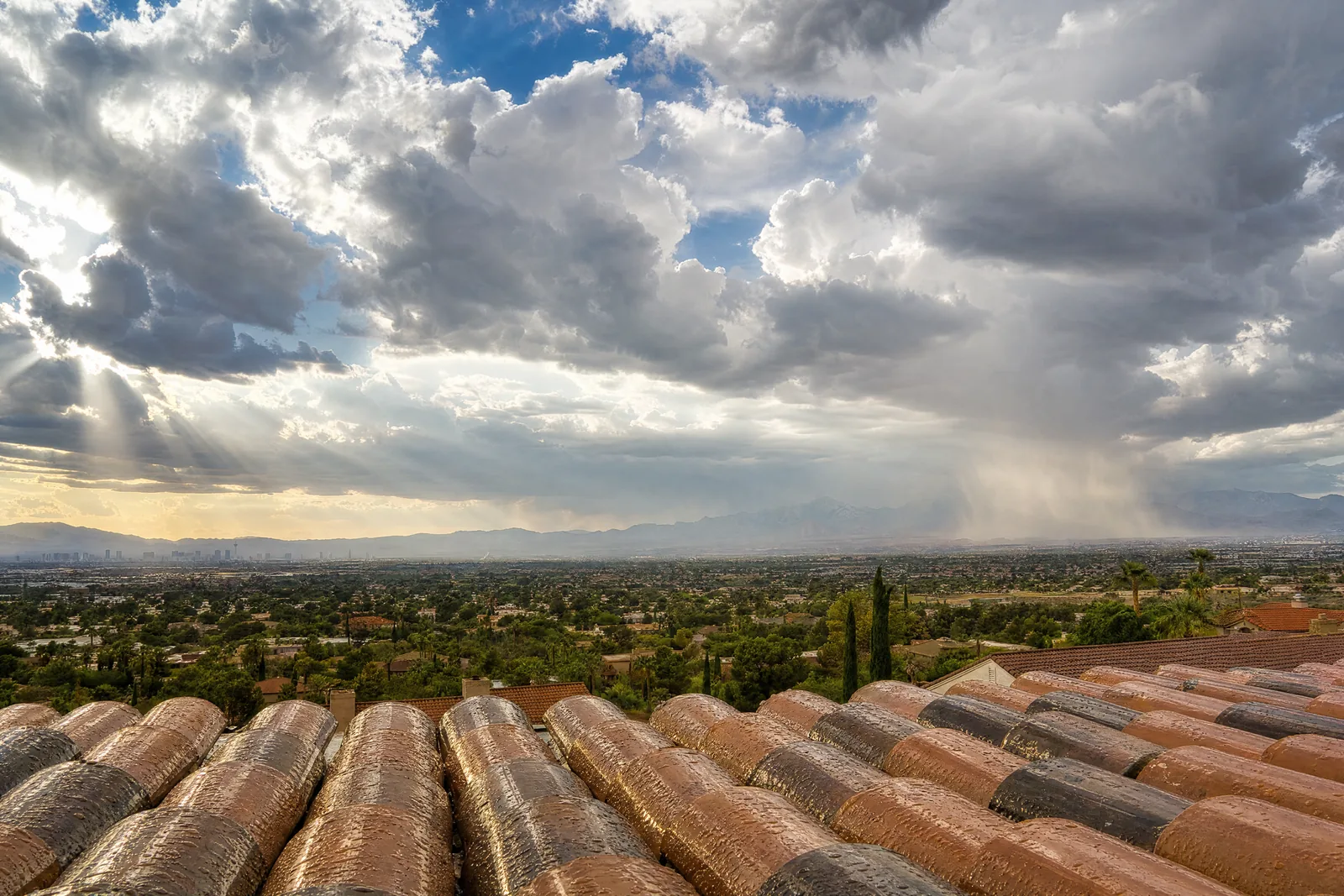
Las Vegas gets most of its rain in a few violent afternoons between late June and September, driven sideways by wind, onto roofs that have been baking dry for nine months. A tile roof with brittle felt can go years without a drop inside and then leak in three rooms in one storm. Wind lifts ridge and hip tile, debris dams the valleys, and a hailburst can crack tile across a whole slope.
Our monsoon response is in two parts, on purpose. First we stop the water: a proper temporary dry-in of the affected area with underlayment and tile reset, or a secured tarp where the damage is too wide to dry in the same day. Second, once the roof is dry enough to walk safely and inspect honestly, we come back and diagnose the real cause and write up the permanent repair. We do not sell the permanent fix from the ladder in the rain.
Monsoon-season priorities
- Active leaks first. Water inside the house gets the earliest slot we have.
- Dry-in that holds. Underlayment and reset tile where possible; tarps secured at the battens, not weighed down with bricks that crack tile.
- Photos for your insurer from the first visit, dated, before anything is disturbed.
- Honest cause. If the storm found a 25-year-old underlayment, we say so, because an insurance claim for age-related failure gets denied and wastes your time.
Water coming in?
Call now. Say "leak" and where the water is showing.
Before the season
The cheapest monsoon repair is the one you do in May.
A pre-monsoon inspection catches the split boot, the cracked ridge mortar and the dammed valley before the first storm does. Book it in spring; the written scope is free either way.
Clear the valleys
Palm fronds, pigeon nests and dust dams send water under the tile on the first storm.
Reset loose ridge & hip tile
Wind-lifted ridge tile is the most common storm damage we see and the easiest to prevent.
Replace split boots and cracked tile
Every one of them is a direct path to the underlayment for sideways rain.
Insurance
Storm damage is usually covered. Age is not.
Wind and hail damage to a roof is normally covered by a Nevada homeowner policy, subject to your deductible. Underlayment that failed because it is 25 years old is not. We document what we find honestly so your claim holds up, and we will meet your adjuster on the roof. See how we handle insurance claims.
Other services
The rest of what we do.
Tile lift & relay
Full underlayment replacement using your existing tile. The job most Las Vegas homes actually need when the roof starts leaking at 15–25 years.
Existing tile reused →Complete re-roof
Tear-off to the deck and rebuild — tile, shingle or low-slope. For roofs past relay, or where the deck itself has gone.
Priced by the square →Shingle & flat roofs
Architectural shingle re-roofs and repairs, rolled roofing and modified-bitumen on flat and low-slope sections. Same inspection, same written scope.
Any roof type →Leak diagnosis & repair
We find the entry point before quoting the fix. Most valley leaks trace to flashing, a cracked jack boot or a valley, not the field of the roof.
Diagnosis before quote →Solar remove & reset
Panels come off, the roof underneath gets done right, panels go back on. Coordinated directly with your installer so nobody voids anybody's warranty.
Coordinated with your installer →Roof inspection & certification
The inspection and written certification escrow asks for, with a scope of work and price if anything needs correcting before close.
Written report →Free inspection · Written scope · Insurance claims handled
Find out what your roof actually needs.
We walk it, photograph it, and hand you the square count and condition notes in writing. The decision is yours after that.