Underlayment replacement · Las Vegas
Tile lift & relay
The most common roofing job in the valley, and the one most homeowners are wrongly quoted as a full tear-off. We lift your tile, replace the paper that failed, rebuild the flashing and set your own tile back down.
What a lift and relay actually is
Every concrete tile roof in the valley is two things: the tile you can see, and the underlayment you cannot. The tile sheds most of the water and takes the sun. The underlayment, a sheet of asphalt felt or synthetic membrane laid over the plywood deck, is the actual waterproofing. When a 1990s or 2000s tile roof starts leaking, nine times in ten the tile is fine and the underlayment has turned brittle and split.
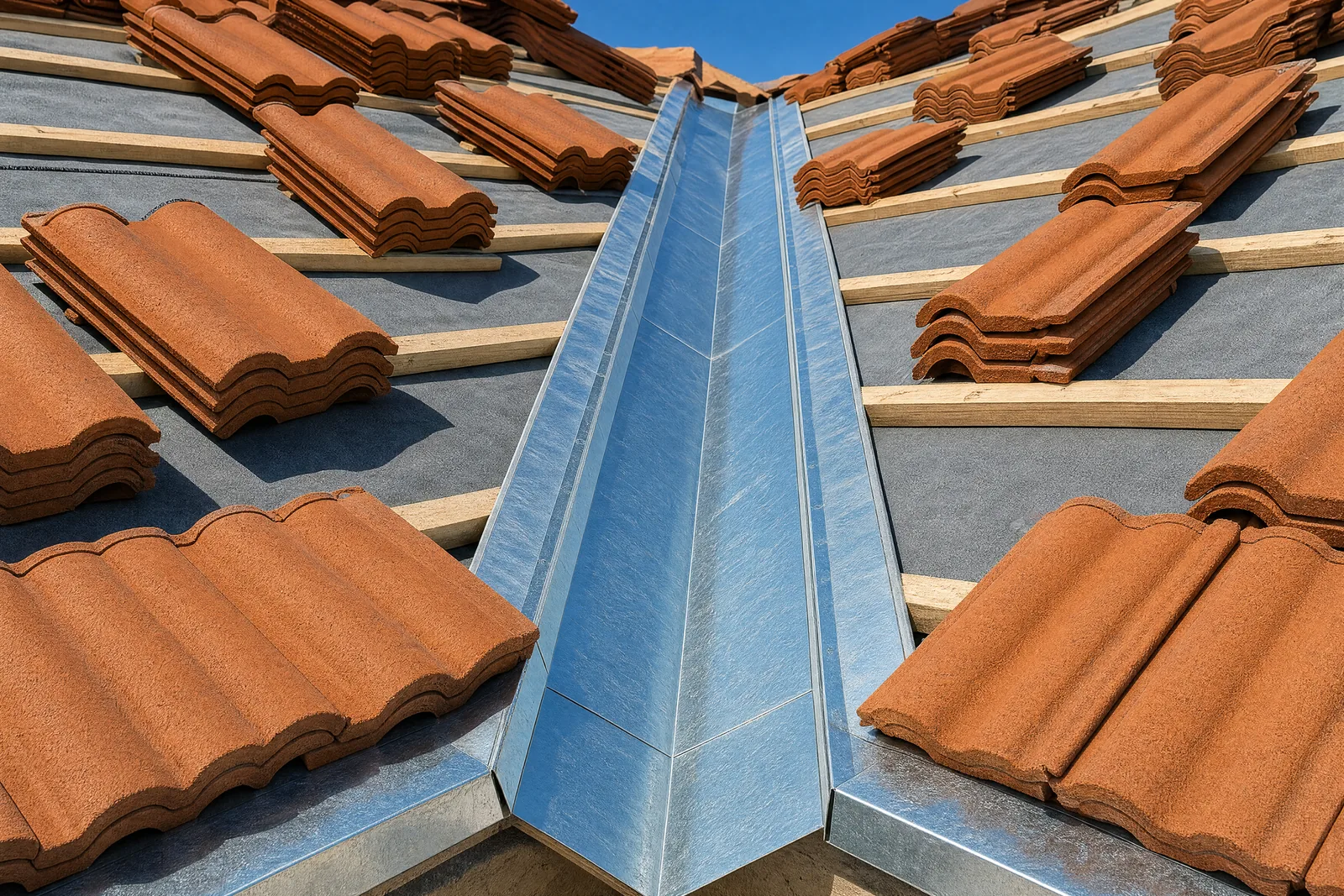
A lift and relay fixes the layer that failed and keeps the layer that did not. We remove the tile and stack it on the roof, strip the old underlayment and battens to the deck, inspect the deck and cut out any rot, install new high-temperature underlayment, new battens where the design calls for them, new valley metal, pipe jacks and wall flashing, and then relay your original tile. Broken pieces are replaced from matching salvage.
Why not just re-roof?
Because you would be paying to replace a product with a 50-year service life at year 20, and the replacement tile will not match the rest of the street. A relay typically costs well under a full tear-off because the single biggest material line, the tile, is already on your roof. Some roofs do need a full replacement; the inspection tells you which one you have, and we put the reasoning in writing.
What we install under your tile
- High-temperature synthetic or SBS-modified underlayment, rated for the deck temperatures a Las Vegas roof reaches. Not 30# organic felt, which is what most of these roofs were built with and what most of them are failing with.
- New battens (and counter-battens where the profile needs them) so the tile sits right and water drains under it.
- New valley metal, the W-profile kind that keeps water from one plane from running under the tile on the other.
- New pipe jacks, vent flashings and wall flashings, the details where the second wave of leaks starts.
- Deck repair by the sheet, at the per-sheet price on your quote, approved by you before we cut.
Not sure if it is a relay or a re-roof?
The inspection answers that in writing, with photos, for free.
Signs your underlayment has failed
What a 20-year-old tile roof looks like from the inside.
Leaks in more than one room
A single leak is usually a detail. Two or three, in different parts of the house, mean the membrane has gone across the field.
Leaks that move
Fixed last year, back this year somewhere else. Patching brittle felt just moves the next split.
Debris in the gutters that is not leaves
Granules and black flakes washing out of the tile courses are the felt breaking up.
Stains at the eaves and under valleys
Water running under the tile on brittle paper shows up at the edges first.
Tile is fine, roof is 18–30 years old
Original felt in this climate is simply at the end of its life, leak or no leak yet.
You were quoted a full tear-off
Get a second opinion before you pay to replace tile that has 30 years left in it.
The job, day by day
What a relay looks like on your street.
Scope & schedule
Permit pulled with the jurisdiction (Clark County or the city). Tile profile matched for replacements. Start date on the contract.
Lift & strip
Tile lifted and stacked in sections, old felt and battens stripped to the deck, deck inspected and photographed, rot cut out by the sheet.
Dry-in & flashing
New underlayment, battens, valley metal, jacks and wall flashing. Nothing is left open overnight; each section is dried in the day it is stripped.
Relay & clean-up
Original tile relaid course by course, ridge and hips reset, broken pieces replaced, magnet sweep for nails, final photos and walkthrough.
Pricing
What a relay costs, and why.
A relay is priced per square (100 sq ft) and the price per square moves with pitch, tile profile, the number of valleys and penetrations, two-storey access, and deck condition. A plain 4:12 single-storey S-tile roof is the cheapest square in the valley to relay; a cut-up two-storey roof with eight valleys is not.
Our quotes break those drivers out as separate lines so you can see exactly what you are paying for and compare it against any other bid. How we price walks through it.
Sample quote — tile lift & relay
Your number depends on square count, pitch, tile profile, access and deck condition. We will not quote a roof we have not walked. The example shows the structure of an Arista quote, not a price for your home.
Other services
The rest of what we do.
Complete re-roof
Tear-off to the deck and rebuild — tile, shingle or low-slope. For roofs past relay, or where the deck itself has gone.
Priced by the square →Shingle & flat roofs
Architectural shingle re-roofs and repairs, rolled roofing and modified-bitumen on flat and low-slope sections. Same inspection, same written scope.
Any roof type →Leak diagnosis & repair
We find the entry point before quoting the fix. Most valley leaks trace to flashing, a cracked jack boot or a valley, not the field of the roof.
Diagnosis before quote →Solar remove & reset
Panels come off, the roof underneath gets done right, panels go back on. Coordinated directly with your installer so nobody voids anybody's warranty.
Coordinated with your installer →Monsoon & storm response
Emergency dry-in and tarping during monsoon season, then a permanent repair scheduled once the system passes.
Temporary dry-in, then a real fix →Roof inspection & certification
The inspection and written certification escrow asks for, with a scope of work and price if anything needs correcting before close.
Written report →Free inspection · Written scope · Insurance claims handled
Find out what your roof actually needs.
We walk it, photograph it, and hand you the square count and condition notes in writing. The decision is yours after that.